The Math Proficiency Acceleration Program

From a score to a reason, and from a reason to a plan. MPAP diagnoses exactly where a learner is struggling, then delivers the teaching materials to close that gap, indicator by indicator.

MPAP Program Overview

The Challenge: Why Math Outcomes Need Attention


Mathematics remains one of the most important foundational skills in Ghana's educational landscape, it supports success in science, technology, and everyday problem-solving. Yet many learners continue to fall short of the Minimum Proficiency Standards set by NaCCA. In most schools, assessment stops at a final score. A score can show that a learner is struggling, but it cannot say why, so teachers are left to guess, and interventions end up generalized rather than targeted.

The MPAP Solution: From Scores to Insight


The Math Proficiency Acceleration Program (MPAP), developed by Scribble Works, shifts the focus from testing to understanding. MPAP provides clear insight into specific learning gaps, whether in decimals, fractions, algebra, or geometry, down to the exact misconception behind a wrong answer. Instead of guessing, educators receive evidence they can act on immediately. At its core, MPAP is built on a simple idea: when teachers understand exactly what a student is struggling with, they can teach more effectively.
assessment

Diagnostic Assessment

Identify learning gaps through structured, curriculum-aligned assessments that go beyond a score.

  • check_circleConcept-level performance insights
  • check_circleCurriculum-aligned questions
  • check_circleClear, specific learning-gap identification
analytics

Learning Analytics

Turn assessment data into insight that guides teaching, not just a grade book.

  • check_circleTopic-by-topic breakdowns
  • check_circleStudent & class performance reports
  • check_circleData-driven teaching support
track_changes

Targeted Intervention

Close learning gaps with structured, hands-on support, not a repeat of the same lesson.

  • check_circleAssignment Math Workbooks
  • check_circleAssignmentX digital learning platform
  • check_circleMath Practical Bootcamps, complete facilitator and learner materials for every proficiency indicator

What's Actually Inside a Bootcamp

Every Math Practical Bootcamp indicator ships as two companion packs, a Facilitator Guide and a Learner Pack, built against Ghana's JHS mathematics curriculum and ready to print.

  • check_circleTeaching the Concept. A plain-language explainer for every indicator, so a facilitator without a mathematics background can teach the underlying idea with confidence, not just hand out a worksheet.
  • check_circleDiagnostic quizzes tagged by error type. Every wrong answer is tagged using Newman's Error Analysis, Comprehension, Transformation, Process Skills, or Encoding, so a facilitator knows exactly why a learner got a question wrong, not just that they did.
  • check_circleHands-on games, not just worksheets. Physical activities like a number-line placement race and story-problem card games keep practice active.
  • check_circleNon-Verbal Reasoning worksheets. A supplementary, pattern-based activity in every indicator that practises the same mathematical reasoning without depending on reading proficiency.

See It in Action: The Denominator Myth

A JHS learner is asked which is greater, 3/8 or 3/5. The common wrong instinct: "eighths have a bigger denominator, so 3/8 must be bigger." That learner is not being careless, they are applying a real but flawed rule.

MPAP's Teaching the Concept page for this indicator names that rule directly and works through the counterexample: 3/8 is 0.375, less than a half, while 3/5 is 0.6, more than a half, so 3/5 is actually greater. The diagnostic quiz then tags that exact wrong answer as a Comprehension-stage error, pointing the facilitator straight to what to reteach.

This is what "from scores to insight" looks like in practice.

Frequently Asked Questions

Find answers to common questions about our MPAP programs

MPAP follows a structured, practical four-step process:
  • Diagnostic Assessment to identify learning gaps
  • Actionable Reporting to highlight areas of difficulty, down to the specific misconception
  • Targeted Reinforcement to address those specific needs through the Practical Bootcamps
  • Impact Measurement to track improvement
This cycle turns everyday classroom activity into a continuous process of learning and progress, not a one-time test.

During the reinforcement phase, identified gaps are addressed through a blended approach:
  • Structured practice using Assignment Math Workbooks
  • Step-by-step reinforcement via the AssignmentX platform
  • Hands-on, facilitator-led learning through Math Practical Bootcamps, each one built around the exact misconceptions learners hold, not a generic review
Learning is not only identified, it is corrected, through materials built for the gap that was actually found.

No, every indicator's Teaching the Concept page is written for exactly that facilitator.

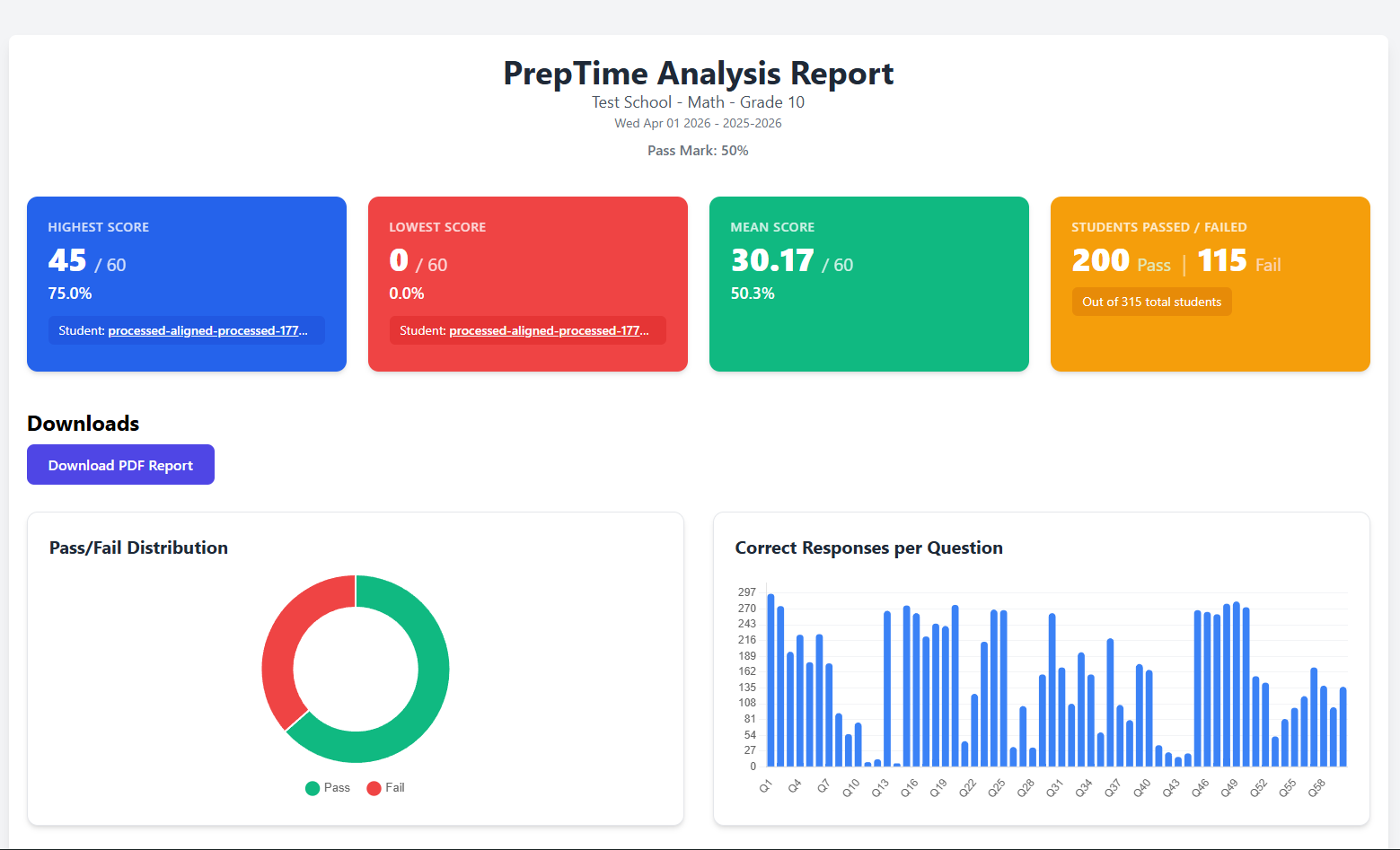
The results of MPAP are measurable and compelling. In one implementation, average scores improved from 46.8% to 54.4%, and the number of high-performing students increased significantly. In another, learners showed strong improvement in topics such as Linear Equations and the Pythagorean Theorem. These outcomes show that when teaching is guided by accurate data and targeted support, improvement can be accelerated, and measured, not just hoped for.

MPAP is designed for flexibility and scale:
  • Schools: Improve performance and give parents clear, specific progress data, not just a report card.
  • Education Offices: Monitor learning outcomes across multiple schools from a single dashboard.
  • NGOs and Donors: Implement programs with measurable impact and reporting that is ready for a board or an annual report.

What sets MPAP apart is its focus on understanding, not just testing. It replaces guesswork with evidence, down to the level of a single tagged wrong answer, and it hands facilitators materials built to close that exact gap, not a generic worksheet. Every learner gets a clear, specific pathway toward proficiency.

Improving mathematics education takes more than assessment, it takes insight, action, and sustained support. MPAP represents a shift toward clarity, accountability, and outcomes that can actually be shown, not just claimed. It is not just a program, it is a working system, already built and already running in classrooms, for transforming how mathematics is taught and learned across Ghana and beyond.
format_quote

"The essence of mathematics is not to make simple things complicated, but to make complicated things simple."

S. Gudder

Discover the power of mathematical thinking.

groups

Get Started

If you are ready to improve mathematics outcomes in your school or program, now is the time to act. Book a free demo, explore the MPAP proposal, or connect with us to learn how you can be part of this transformation.
MPAP turns assessment into insight, and insight into real learning.